

Have you ever seen how a simple toy can brighten your baby's day? In the rush of our daily lives, finding moments that help your little one grow is both special and sometimes a little tricky.
Today, I’m excited to share two delightful toys that bring smiles and help build important skills. One is a board book with bold, contrasting images that make it easy for your baby to follow along. The other is a soft, sensory ball that feels gentle to touch, sparking curiosity and exploration.
These playful tools turn learning into a cozy, everyday experience, like a warm hug from a loved one. Give them a try and watch your baby light up with joy and wonder.
Top Infant Toys for Cognitive Development: Sensory and Motor Foundations

These baby toys are chosen with love to spark joy and build the early skills that help babies explore the world. Each toy offers eye-catching images and soft textures, gently inviting your little one to play and learn while satisfying their natural curiosity.
For example, high-contrast board books are perfect for little eyes. They use bold black-and-white images that make visual tracking fun and engaging. Sensory touch balls have different textures for tiny hands to feel, making each hold a delightful learning opportunity. Stacking cups encourage spatial thinking and introduce the fun of cause and effect as your baby plays with different sizes. A basic shape sorter offers a playful way to solve simple puzzles and match shapes. And tummy-time activity mats turn exercise into an enjoyable adventure by linking movement and brain growth while helping to strengthen head control.
| Toy | Purpose |
|---|---|
| High-contrast board books | Visual tracking (0–3 months) |
| Sensory touch balls | Tactile learning (3–6 months) |
| Stacking cups | Spatial reasoning (6–9 months) |
| Basic shape sorter | Problem-solving (9–12 months) |
| Tummy-time activity mat | Motor and brain connection (0–6 months) |
These toys are more than just playthings; they are the start of a beautiful journey of discovery. Next time you shop for your little explorer, keep these options in mind to encourage safe, happy learning every day.
Toddler Problem-Solving Toys for Cognitive Development

Puzzles and Matching Games
Knob puzzles, floor puzzles, and matching cards are playful ways to help little ones discover shapes, colors, and patterns. They invite kids to stick with a task while fine-tuning their small motor skills. Think about it, when a child picks up a uniquely shaped piece to complete a picture, they're not just playing; they're building confidence and learning to solve problems one fun step at a time.
Building Blocks and Shape Sorters
Building blocks and shape sorters give toddlers a chance to experiment with design and structure in their own creative way. These toys spark curiosity and teach spatial awareness as kids learn which pieces fit perfectly. Picture a child happily stacking blocks and then mixing them up by size and shape, it’s a playful journey that boosts hand-eye coordination and logical thinking while making every moment a mini adventure.
Interactive Books and Storytelling Toys
Interactive books with sound, lights, and fun pages offer a delightful mix of learning and play. They create an engaging world of sights and sounds that nurture vocabulary and listening skills. Imagine turning a page and hearing a soft sound that sparks a question or a giggle, it transforms reading into a vibrant, sensory experience where every little noise adds to a joyful story.
Preschool Mind Enhancers with Toys for Cognitive Development
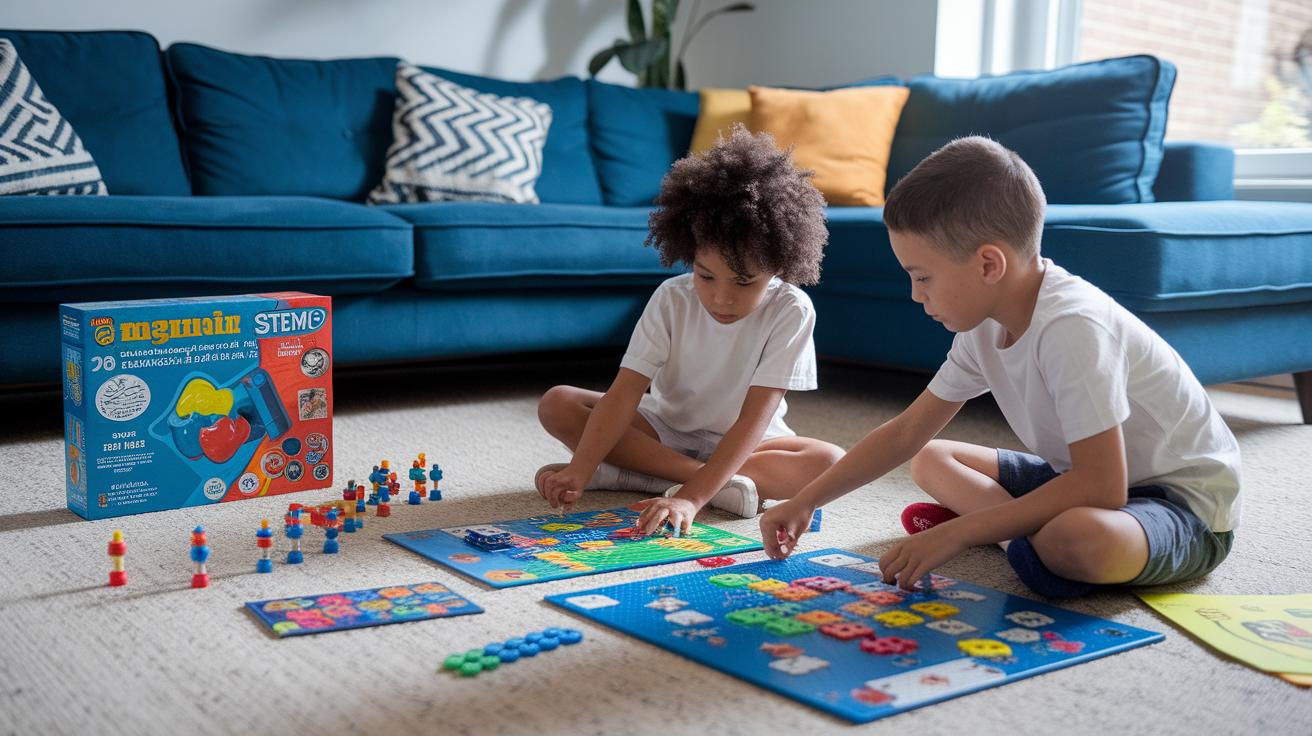
When little ones play with the right toys, their imaginations bloom and essential skills grow. Simple board games not only spark memory but also teach them the art of taking turns. Puzzle sets with just a dozen or two pieces help kids learn sequencing and fine hand movements, making every puzzle piece a fun challenge. It’s amazing how such games turn ordinary play into learning adventures that build patience and persistence.
STEM kits with magnets and basic circuits let children see cause and effect in action, kindling their natural curiosity about how things work. And role-play sets invite a world of storytelling and friendship, helping preschoolers practice sharing and understand one another's feelings.
If you’re on the lookout for age-appropriate picks, check out this resource: educational toys for 3 year olds. These toys are made to gently challenge young minds, just the right mix of fun and learning. Every toy offers a different way to grow and explore.
| Toy Type | Cognitive Skill Target | Age Range |
|---|---|---|
| Board Games | Memory & Rule-Following | 3–5 yrs |
| Puzzle Sets | Sequencing & Fine Motor | 3–5 yrs |
| STEM Kits | Cause-Effect & Logic | 4–6 yrs |
| Role-Play Sets | Narrative & Social Skills | 3–5 yrs |
| Interactive Books | Vocabulary & Listening | 3–5 yrs |
2 toys for cognitive development Spark Joy

Selecting the right toys is a lot like choosing a bedtime story. You want them to feel cozy and safe while gently nudging your little one to learn and grow. It’s all about finding the perfect match for their stage of development.
Pick toys that are just right for their age. Choose playful learning activities that your child can enjoy comfortably today. Look for creative tools that invite open-ended play, letting them explore in many fun ways. And go for interactive toys that mix new surprises with a sense of familiarity so playtime feels balanced, not overwhelming.
Sometimes, less really is more. Researchers found that too many toys can make little ones feel overwhelmed. Think of it like this: a toddler carefully fitting together a puzzle teaches them focus, persistence, and logic. Look for toys that delight the senses, soft textures, gentle sounds, or bright colors, that spark curiosity and invite discovery.
Follow your heart and trust your instincts as you watch your child interact with a toy. If they naturally settle in and light up with excitement, you’re definitely on the right track.
Safety and Quality Standards for Toys for Cognitive Development

When choosing brain training toys for ages 3 to 10, safety is always at the forefront. These toys must be free of small parts and made with non-toxic, BPA-free materials. Rounded edges help prevent accidental bumps, and a sturdy design means they stand up to lots of busy play. Plus, easy-to-clean surfaces keep mold and germs at bay, offering a healthier playtime for your little one.
It's also important to look for trusted safety labels. Check for ASTM or CPSC compliance marks, or certifications that say "childrens toy safe." Always take a moment to confirm the age rating on the package so you can avoid any potential choking hazards. These thoughtful details not only protect your child but also give you the confidence that their toy is built with their growth and safety in mind.
Final Words
In the action, we explored smart picks that support sensory play and cognitive growth while keeping safety and eco-friendliness in mind. We looked at the benefits of high-contrast board books, tactile toys, and practical tips for selecting secure products. Each section offered clear advice to help build strong foundations for your baby. By choosing well-made toys for cognitive development, you're supporting comfort and healthy growth one gentle step at a time. Enjoy watching your little one shine with every new discovery!
FAQ
What are the best toys for cognitive development?
The best toys for cognitive development include puzzles, building blocks, matching games, interactive books, and sensory play items that promote problem-solving, language skills, and fine motor control.
How do toys help cognitive development?
Toys help cognitive development by engaging children in problem-solving tasks, boosting memory and language skills, and enhancing hand-eye coordination through playful, interactive activities.
What types of toys aid various age groups in cognitive development?
Age-appropriate cognitive toys vary: toddlers benefit from sensory balls, shape sorters, and interactive books, while preschoolers enjoy puzzles, board games, and simple STEM kits that boost reasoning and fine motor skills.
Which type of toys do children with cognitive delays often prefer?
Children with cognitive delays often prefer interactive, sensory-rich toys that allow open-ended exploration, easing gradual skill building through fun, adaptable activities.
What toys support Piaget’s theory?
Toys supporting Piaget’s theory include items that encourage discovery through play, such as stacking cups, shape sorters, puzzles, and interactive storybooks that allow exploration and hands-on learning.
What type of cognitive development toys can adults use?
Adults can use brain teasers, puzzles, and strategy games that challenge memory, creative thinking, and problem-solving skills, offering an engaging way to stimulate cognitive growth.